
SEO Title:
How to Reopen a Default Judgment in Texas: Step-by-Step Guide for Consumers Facing Debt Lawsuits
—
How to Reopen a Default Judgment in Texas: Step-by-Step Guide
If you’ve been sued by a debt collector in Texas and missed the deadline to respond, the court may have entered a default judgment against you. This means the creditor wins automatically, often resulting in wage garnishment, bank levies, or liens on your property. However, if you believe the default judgment was entered unfairly or you had a valid reason for not responding on time, Texas law allows you to request the court to reopen the judgment.
In this comprehensive guide, we’ll walk you through how to reopen a default judgment in Texas, explain your rights, and show you when and why it’s crucial to seek legal assistance.
—
What is a Default Judgment?
A default judgment occurs when a defendant (in this case, the person sued) doesn’t respond to a lawsuit within the required timeframe—typically 20 to 30 days in Texas. The creditor can then request the court to rule in their favor without a trial. While this can be devastating, it’s not always the end of the road.
—
Common Scenarios Leading to Default Judgments in Debt Cases
Many Texans face default judgments because they:
– Didn’t receive the lawsuit papers (improper or lost service)
– Thought the lawsuit wasn’t serious or would go away
– Didn’t fully understand the legal process or missed deadlines
– Were unsure how to defend themselves against debt claims
For example, imagine John, who was sued by a debt collector for credit card debt. John never got the court papers because of a change in his mailing address. The creditor won by default. Now John has wage garnishment. But under Texas law, John can ask the court to reopen that default judgment so he can defend himself properly.
—
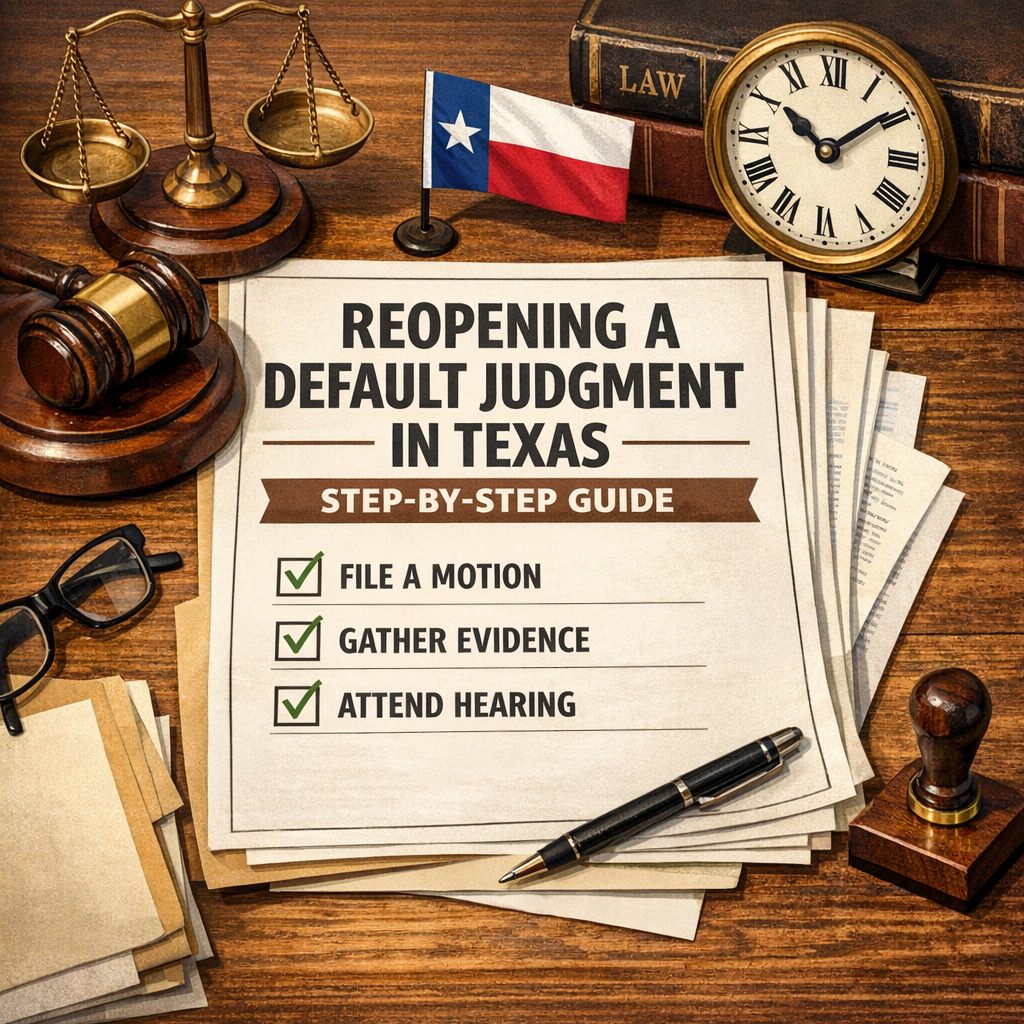
Step-by-Step Guide: How to Reopen a Default Judgment in Texas
Step 1: Confirm the Judgment Date and Grounds for Reopening
You typically have a limited time to file a motion to reopen the judgment. Under Texas Rule of Civil Procedure 329b, you may have 6 months after the judgment is signed to file a motion for a new trial or to set aside a default judgment, unless there is fraud, misrepresentation, or other exceptional circumstances.
You need to have a valid excuse such as:
– Lack of proper service (you were never officially served)
– Mistake or accident
– Newly discovered evidence
– Fraud by the other party
– Other justifiable cause (e.g., illness, emergency)
—
Step 2: File a Motion to Set Aside or Vacate the Default Judgment
This is the formal legal request asking the court to reopen the case. The motion must clearly state:
– Why you did not respond to the lawsuit on time
– The legal basis for setting aside the judgment
– Your intention to defend the lawsuit with merit (you must show a “meritorious defense”)
– Any supporting evidence (affidavits, proof of improper service, etc.)
Texas courts look favorably on cases where the defendant acts promptly and has a reasonable explanation and defense.
—
Step 3: Serve the Motion on the Plaintiff or Plaintiff’s Attorney
After filing, you must notify the creditor or their attorney that you are asking to reopen the case. This gives them a chance to respond or object.
—
Step 4: Attend the Court Hearing
The judge will schedule a hearing to review your motion. Be prepared to explain:
– Why you missed the original deadline
– What defense you have against the debt claim
The court has discretion to grant or deny your motion based on the circumstances.
—
Step 5: If Granted, Proceed with Your Defense
If the judge sets aside the default judgment, the case essentially resets. You will have an opportunity to answer the lawsuit, request discovery, and possibly negotiate or fight the claim.
—
Your Rights Under Texas Law
Texas consumers are protected by several laws when dealing with debt collections and lawsuits:
– Right to Proper Service: You must be legally served with court papers before a judgment.
– Right to be Heard: If you did not respond, Texas law lets you reopen judgments under certain conditions.
– Fair Debt Collection Practices: Debt collectors must follow Texas and federal laws (FDCPA) and cannot harass or mislead you.
– Right to Defend: Even after a default, you can present your side, challenge the debt amount, or negotiate.
– Protection Against Excessive Garnishment: Texas law limits the percentage of wages that can be garnished.
Understanding these rights is key to challenging unfair debt claims and stopping unfair collection practices.
—
How a Debt Defense Lawyer Can Help
Navigating the reopening process and defending yourself in court can be complex, especially with the stakes so high. A debt defense attorney knowledgeable in Texas law can:
– Review your case and verify if the default judgment can be set aside
– File the correct motion on your behalf within deadlines
– Gather evidence supporting your defense and prove improper service or other grounds
– Represent you in court hearings and negotiations
– Help you avoid costly mistakes that could worsen your situation
– Advise you on options including settlements, payment plans, or bankruptcy if necessary
Hiring an experienced lawyer increases your chances of successfully reopening the default judgment and achieving a favorable outcome.
—
Frequently Asked Questions (FAQ)
Q1: How long do I have to reopen a default judgment in Texas?
You generally have 6 months from the judgment date to file a motion to set aside under Texas Rule of Civil Procedure 329b, unless the judgment was obtained by fraud or other extraordinary means.
Q2: What if I never received the lawsuit papers?
If you were not properly served, this is a strong reason to ask the court to reopen the default judgment. You must provide evidence that service was defective.
Q3: Can I reopen a default judgment if I don’t have a defense?
No. You must show a “meritorious defense” — a valid legal reason why the judgment should not stand.
Q4: Will reopening the judgment stop wage garnishment?
Yes, reopening pauses enforcement actions like garnishment until the case is resolved.
Q5: Is it expensive to file to reopen a default judgment?
Filing fees are usually modest, but attorney fees vary. Many debt defense lawyers offer free consultations to evaluate your case.
—
Internal Linking Suggestions for Texas Debt Law Site
– Link to pages on Debt Collection Defense Strategies
– Link to How to Respond to a Debt Lawsuit in Texas
– Link to Wage Garnishment Laws and Protections in Texas
– Link to Understanding Credit Card Debt Lawsuits
– Link to Free Consultation Offer Page
—
Take Action Now: Protect Your Texas Debt Rights
If a default judgment has been entered against you, don’t wait until collection actions impact your financial life. You have rights under Texas law, and it’s possible to reopen that judgment and defend yourself — but time is limited.
Contact Texas Debt Law today for a FREE consultation. Our experienced debt defense attorneys understand how to navigate the reopening process and fight to protect your assets and future.
Call now or fill out our online form to get the help you need to take control of your debt lawsuit.
—
Remember: A default judgment is serious, but not always final. Take action immediately — your financial rights depend on it.