
SEO Title:
How to Negotiate with Debt Collectors in Texas: 5 Steps to Protect Your Rights
—
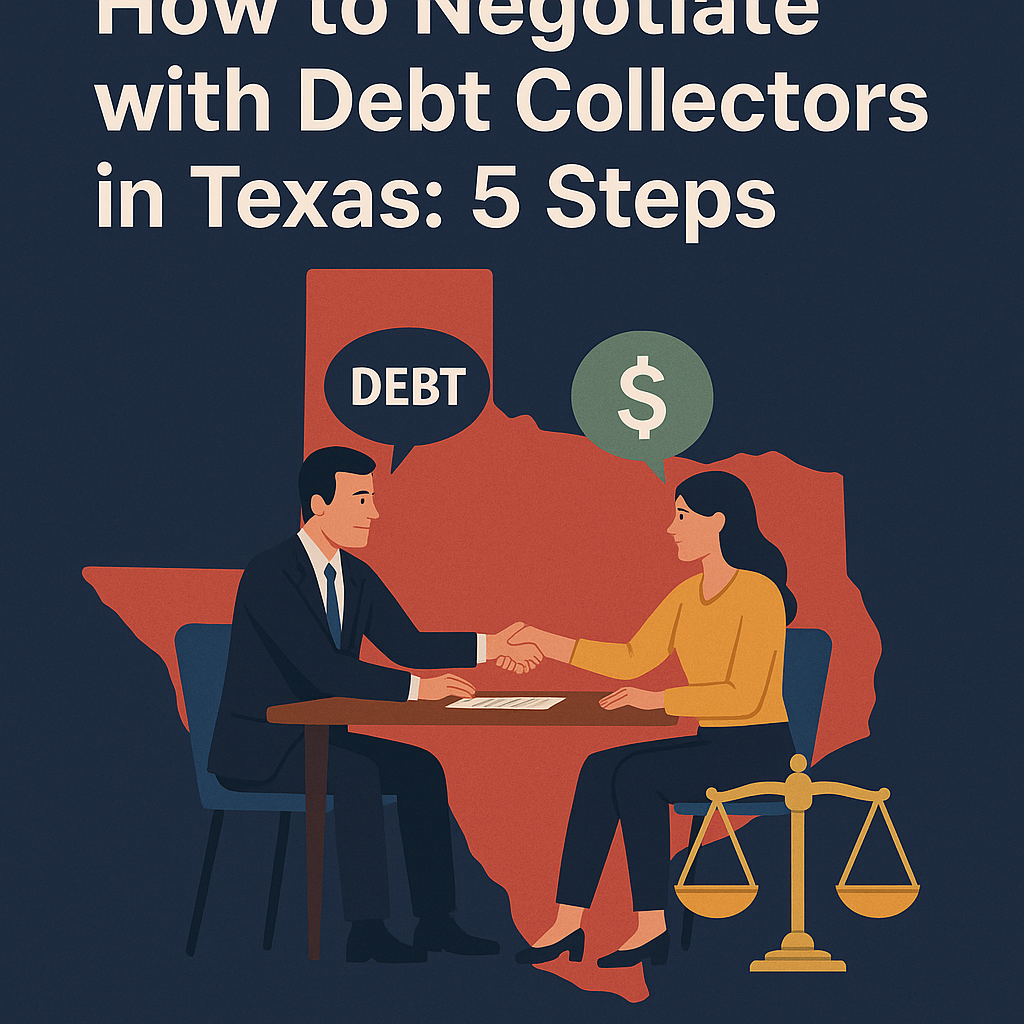
How to Negotiate with Debt Collectors in Texas: 5 Steps
Dealing with debt collectors can be stressful, especially when you’re facing a potential lawsuit in Texas. Understanding how to negotiate with debt collectors in Texas is crucial to protecting your financial well-being and rights. This guide walks you through 5 essential steps to effectively negotiate with debt collectors under Texas law, what to expect if sued, and how to navigate the court process.
—
Understanding the Debt Collection Landscape in Texas
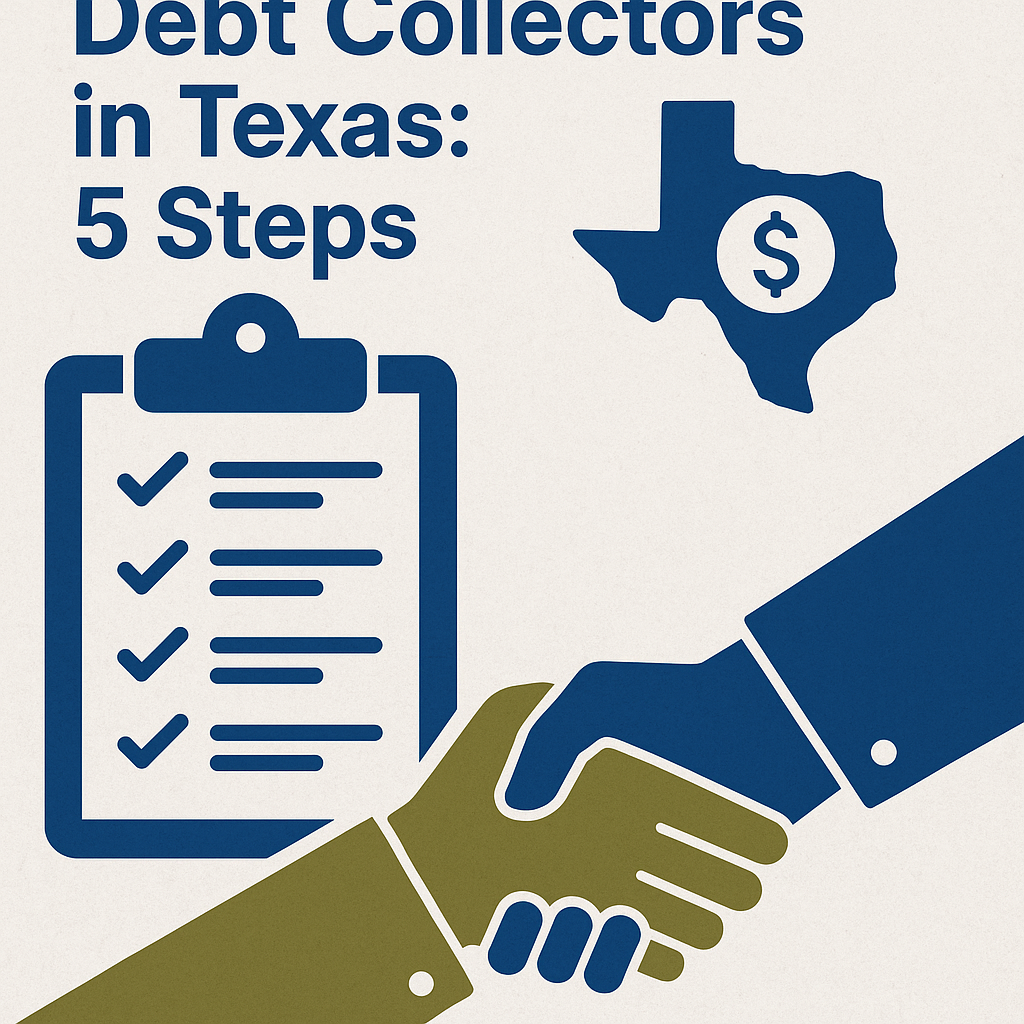
Debt collectors in Texas are governed by state statutes and the federal Fair Debt Collection Practices Act (FDCPA). These laws set limits on how collectors may contact you, what they can say, and lay the groundwork for your rights if you are sued for a debt.
Scenario: Mary, a Texas resident, received a notice from a law firm claiming she owed $3,500 in medical bills. The firm threatened a lawsuit if she didn’t pay immediately. Unsure of what to do, she wanted to understand her options for negotiating the debt while protecting her rights.
—
Your Rights Under Texas Law
Before diving into the negotiation steps, it’s important to know your rights:
– No Harassment: Debt collectors cannot call you incessantly or at unreasonable hours (Tex. Fin. Code § 392.102).
– Written Validation: You have the right to request written validation of the debt within 30 days after the first contact (FDCPA, 15 U.S.C. § 1692g).
– Protection from Defamation: False representation or threats of arrest/embarrassment are illegal.
– Right to Dispute Debt: You can dispute the debt and request verification before making any payments.
– Statute of Limitations: For most debts in Texas, the statute of limitations is four years. If the debt is time-barred, collectors cannot sue you to collect.
Knowing these rights lets you negotiate confidently, avoid unfair treatment, and prepare if a lawsuit is filed.
—
Step 1: Request Verification and Review Your Debt
If contacted by a debt collector, always start by requesting written verification of the debt. This includes:
– The amount owed
– The original creditor’s name
– Date of last payment
This validation prevents you from paying mistaken or fraudulent debts.
Real-life example: John received calls demanding payment for a credit card account he believed was settled. After requesting verification, he discovered the debt collector was attempting to collect on an old, disputed balance.
—
Step 2: Assess Your Financial Situation and Prioritize Debts
Before negotiating, evaluate your budget realistically. Know how much you can afford to pay — whether in a lump sum or installments.
– List monthly expenses and income.
– Prioritize debts that impact your credit or have lawsuits pending.
– Consider whether negotiating a reduced lump sum payment (settlement) or a payment plan is better.
—
Step 3: Make an Initial Offer and Negotiate
With verification in hand and a clear budget, start your negotiation:
– Start low: Offer less than you can afford to allow room to negotiate.
– Get everything in writing: Any settlement or payment plan should be documented.
– Avoid verbal agreements: Insist on written confirmation detailing agreed terms, including that the account will be marked “paid in full” or closed.
Scenario: Lisa negotiated with a Texas collection agency and offered 60% of the total balance. The collector accepted, and she secured a written agreement confirming the settlement.
—
Step 4: Respond if Sued in Texas Debt Court
If a debt collector files a lawsuit, understanding Texas court procedures is vital:
– Answer the petition: You must file an official response (called an “Answer”) within the time frame specified (usually 20 days). You can deny the debt, request validation, or raise defenses.
– Attend hearings: Nonappearance can result in a default judgment against you.
– Request discovery: You can ask for evidence, like the original contract, to challenge the collector’s claim.
– Negotiation opportunities: Even after a suit is filed, you can negotiate directly with the collector or through mediation to settle before trial.
Example: After being sued, Carlos immediately answered the petition denying the debt and requested verification. During discovery, discrepancies in the collector’s paperwork led to a favorable settlement.
—
Step 5: Get Everything in Writing and Follow Through
Once a settlement or payment arrangement is agreed upon, always get detailed written documentation. This should include:
– The exact terms of payment
– Any effects on your credit report
– Agreement that the debt is considered resolved after payment
Maintain copies of all correspondence and payment receipts. Failure to submit payments as agreed can reignite collection efforts or lawsuits.
—
How a Debt Defense Lawyer Can Help
Negotiating with debt collectors and navigating Texas debt law can be overwhelming.
A skilled debt defense lawyer can:
– Review your case and assess the validity of the debt
– Negotiate favorable settlements or payment plans
– Represent you in court, ensuring your rights are protected throughout the legal process
– Help you avoid default judgments that can harm your credit and financial future
– Advise on cases involving statute of limitations or possible violations of debt collection laws
If you are facing aggressive collectors or a lawsuit, consulting a Texas debt defense lawyer can provide peace of mind and improve your chances of a positive resolution.
—
FAQs: How to Negotiate with Debt Collectors in Texas: 5 Steps
1. What if I ignore a debt collector in Texas?
Ignoring calls and letters can lead to a lawsuit. If sued, you risk a default judgment, which allows the collector to garnish wages or seize assets under Texas law.
2. Can I negotiate a debt after being sued?
Yes. You can negotiate at any point, even during court proceedings, to reach a settlement or payment agreement.
3. How long does a debt collector have to sue me in Texas?
Generally, they have four years from your last payment or acknowledgment of the debt (Texas Civil Practice & Remedies Code § 16.004).
4. What happens if a debt collector violates Texas debt collection laws?
You may have grounds to file a complaint with the Texas Attorney General or pursue damages in court for harassment or unfair practices.
5. Do I have to pay a debt collector who contacts me out of state?
Texas law applies to debts and collectors operating in Texas. Foreign collectors must comply with Texas law when collecting from Texas residents.
—
Internal Linking Suggestions
For more detailed information on handling debt collector lawsuits and your legal defense options, visit our pages on:
– Texas Debt Laws and Your Rights
– How to Respond to a Debt Collector Lawsuit in Texas
– Debt Defense Lawyer Services in Texas
– Understanding Texas Statute of Limitations on Debt
—
Final Thoughts and Call to Action
Facing debt collection or a lawsuit in Texas often feels daunting, but knowing how to negotiate with debt collectors in Texas can empower you to take control of your financial future. Following these five steps—and exercising your rights under Texas law—can help you resolve debts fairly while preventing legal consequences.
If you have been sued or want professional help negotiating your debt, don’t wait. Contact our expert Texas debt defense lawyers today for a free consultation. We’ll review your case, protect your rights, and work toward the best possible outcome. Call now and take the first step toward financial peace of mind.
—
Disclaimer: This article is for informational purposes only and does not constitute legal advice. Consult a qualified attorney for advice on your specific situation.